● SportsLab is a research-driven sports analytics platform● Covering Soccer · Basketball · NFL · Tennis● Original studies and tactical analysis● Contributor applications open — apply to write for SportsLab● Join the newsletter for premium research updates● SportsLab is a research-driven sports analytics platform● Covering Soccer · Basketball · NFL · Tennis● Original studies and tactical analysis● Contributor applications open — apply to write for SportsLab● Join the newsletter for premium research updates
LaLiga's retro matchday is one of the smartest marketing moves in football this year
LaLiga's retro-themed matchday is more than a nostalgic tribute. It is a smart commercial strategy that turns memory, identity, and design into fan engagement and revenue.
Soccer
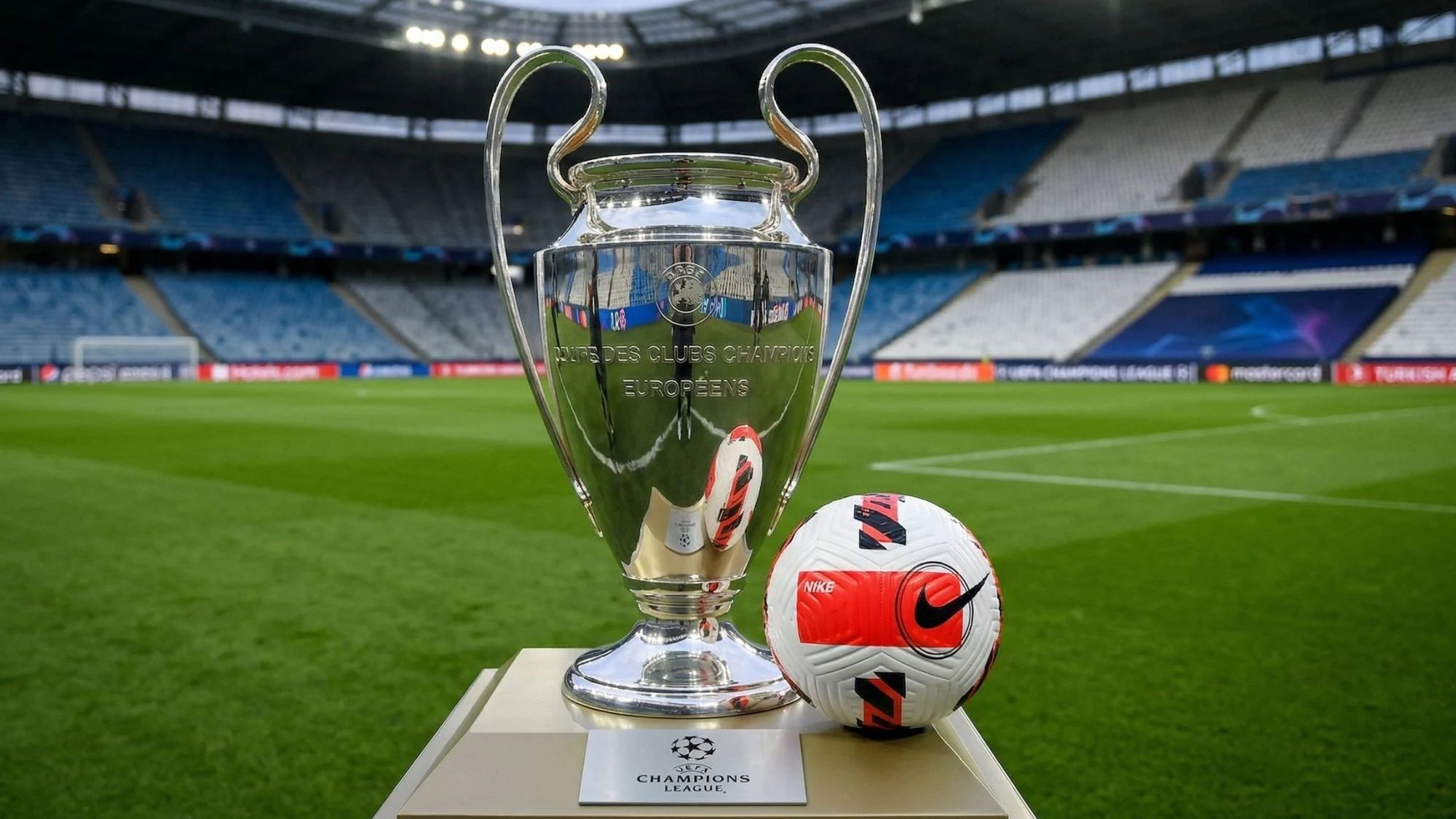
Nike Is Not Buying a Ball
Why the most filmed object in European football may be the sport's most underestimated brand asset
Soccer
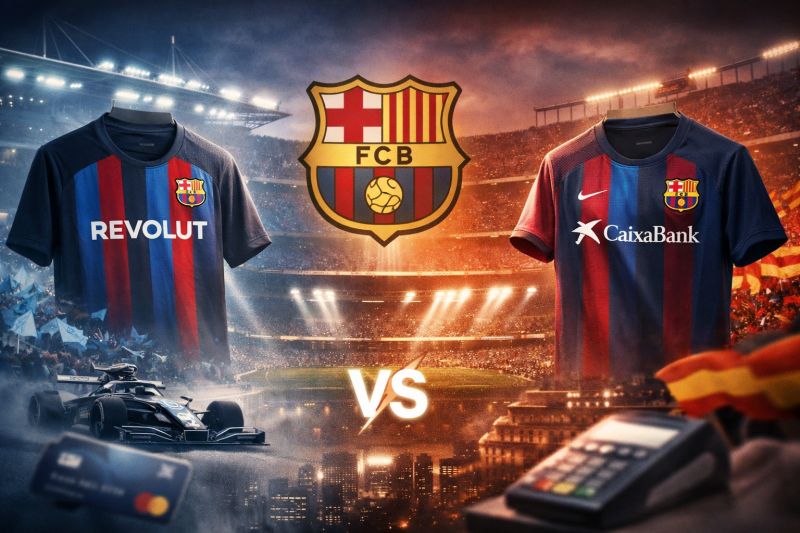
Revolut vs CaixaBank for Barça Isn't Just a Sponsorship Battle
Why the FC Barcelona sponsorship race signals a deeper shift in how banking brands use sports as a distribution channel.
Basketball
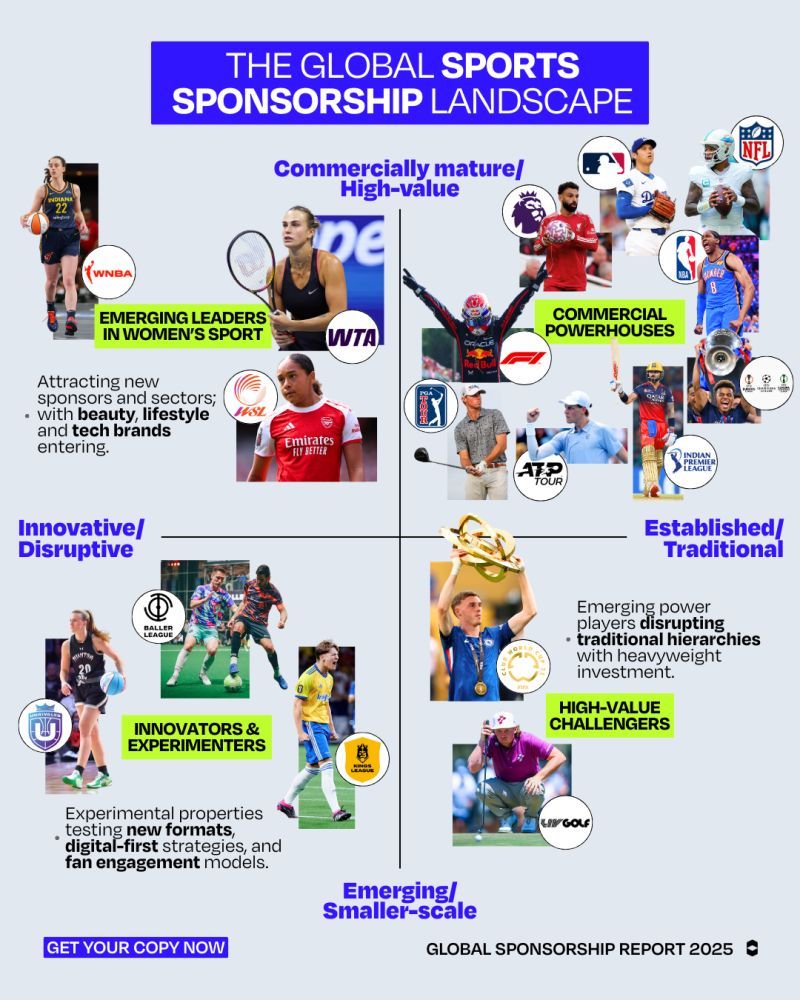
Global Sponsorship Trends 2025: What's Reshaping Sports Marketing
Key insights from the Global Sponsorship Report 2025 highlighting football dominance, women's sports growth, and digital transformation.
Other Sports
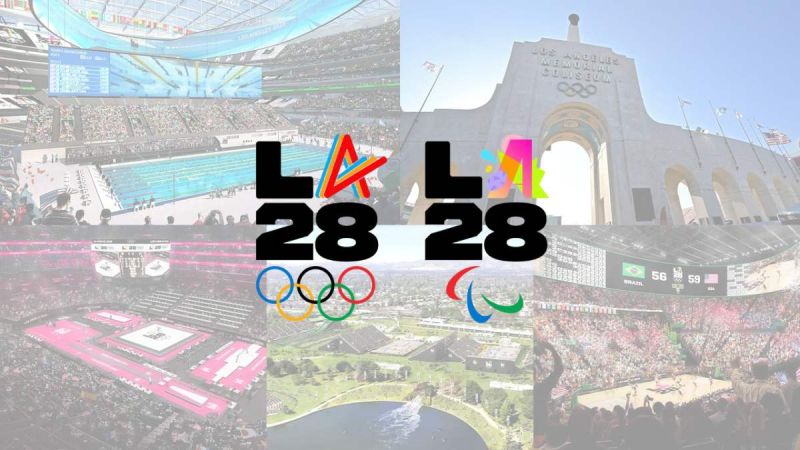
LA28 Olympics Are Rewriting the Sponsorship Playbook
How venue naming rights are transforming Olympic sponsorship strategy and unlocking new commercial opportunities.
Other Sports
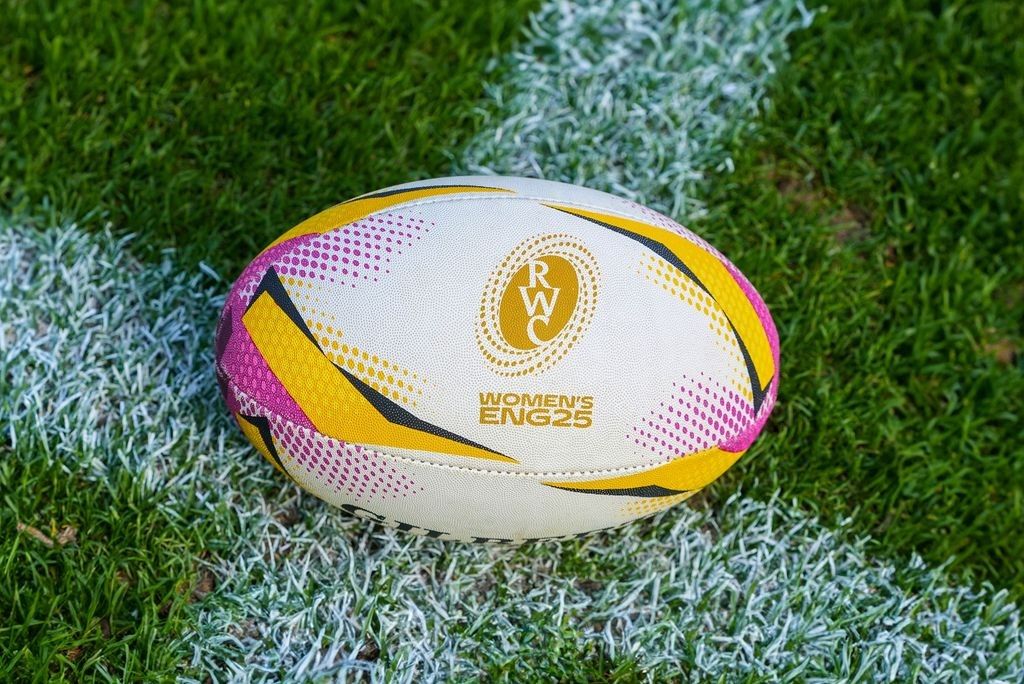
From Breakthrough Moment to Blueprint: Sponsorship Lessons from the 2025 Women's Rugby World Cup
How the Women's Rugby World Cup 2025 is redefining sponsorship strategy through unbundling, audience focus, and real-world activation.
Soccer
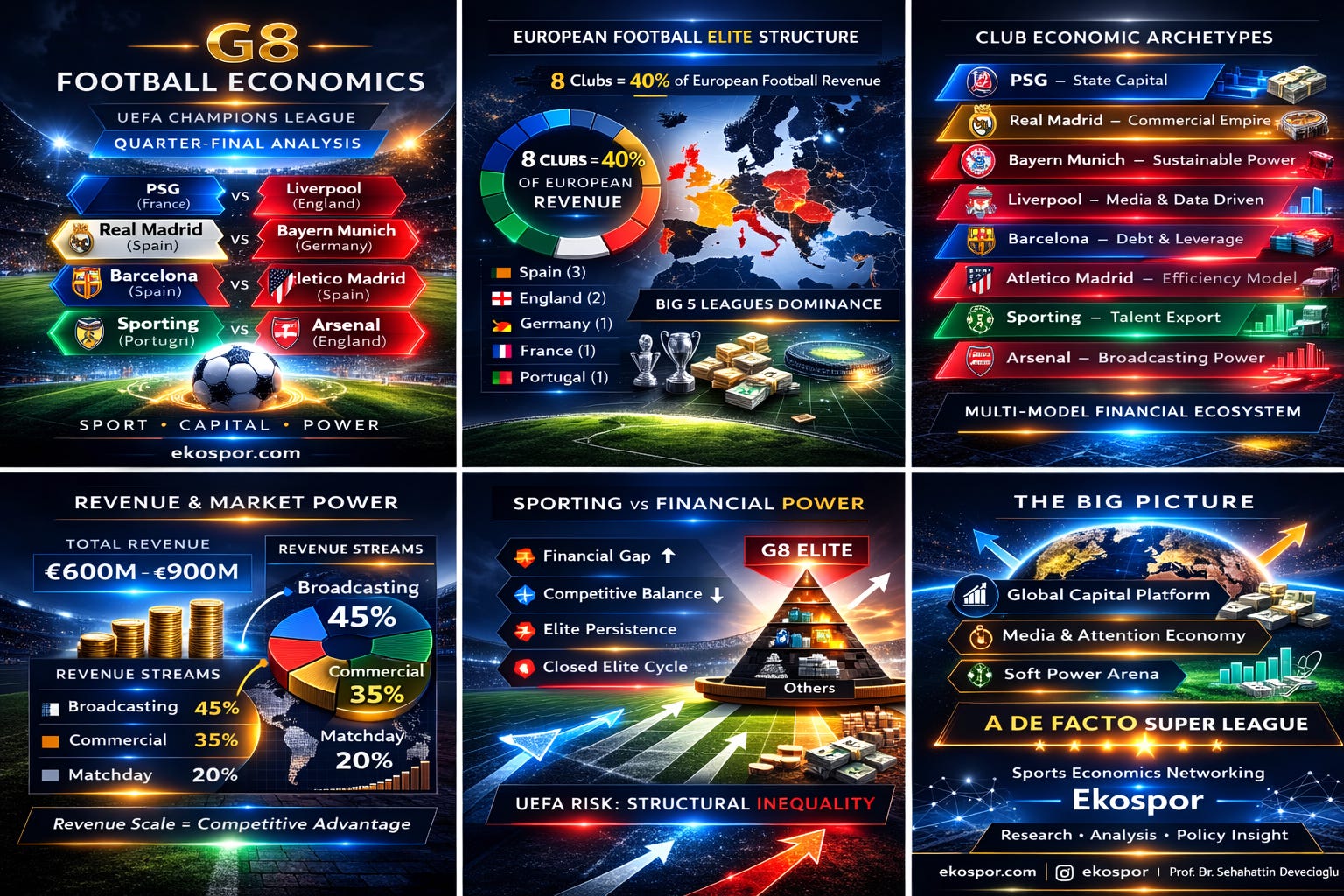
G8 Football Economics
UEFA Champions League Quarter-Final Analysis
Soccer
The UEFA EURO 2024 Environmental, Social and Governance Report
The UEFA EURO 2024 ESG report showcases the results of a €29.6m investment in sustainability and a data-driven approach.
Other Sports
Protecting the FIFA World Cup 2026 and 2028 Summer Olympics from Corruption
A policy-focused analysis of corruption risks and governance strategies for two of the world's biggest upcoming sporting events.
Other Sports
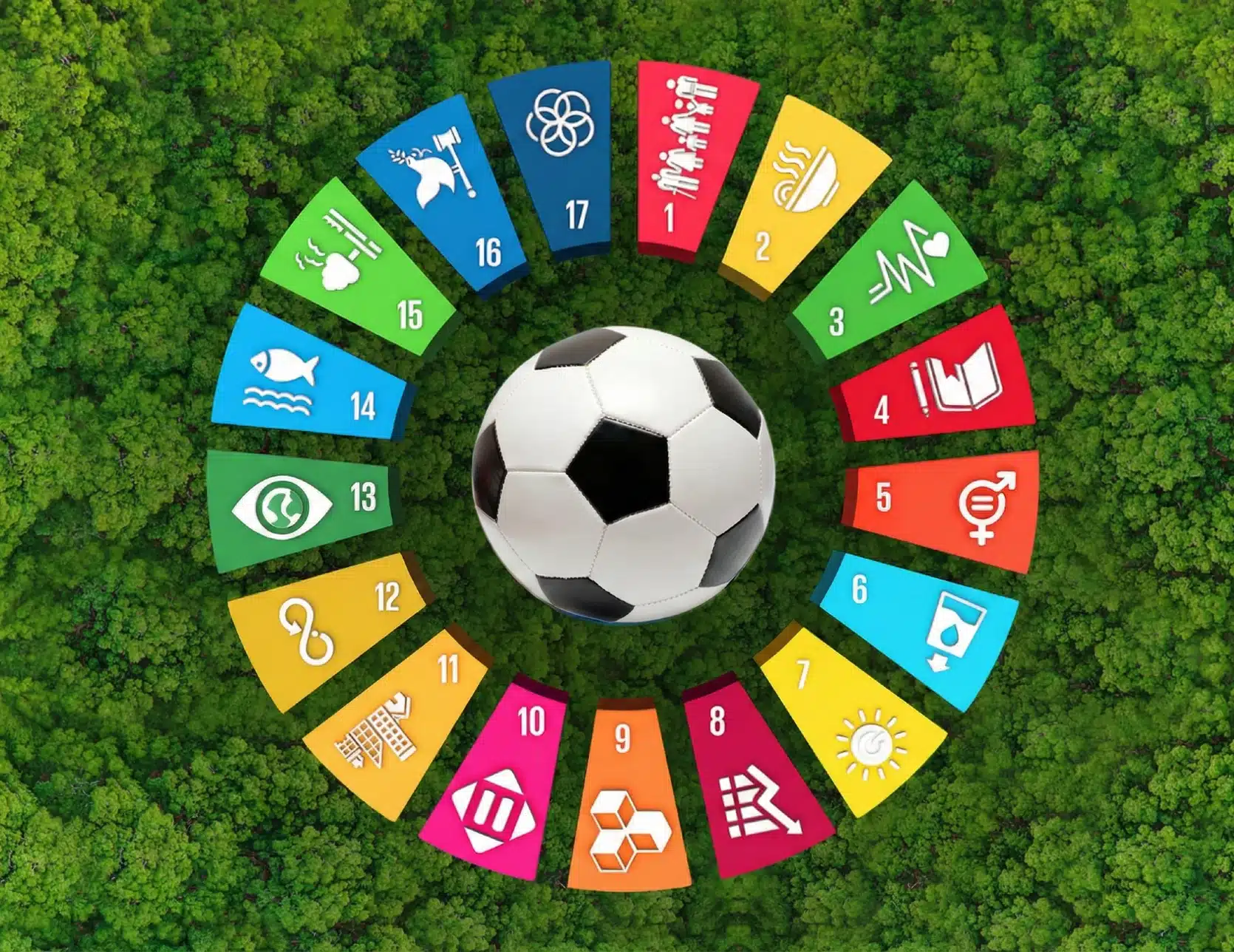
The Sports Economy: What Is It and How Could It Improve the Health of Both People and Planet?
How a $2.3 trillion global sector can drive healthier societies while addressing climate and sustainability risks
NFL
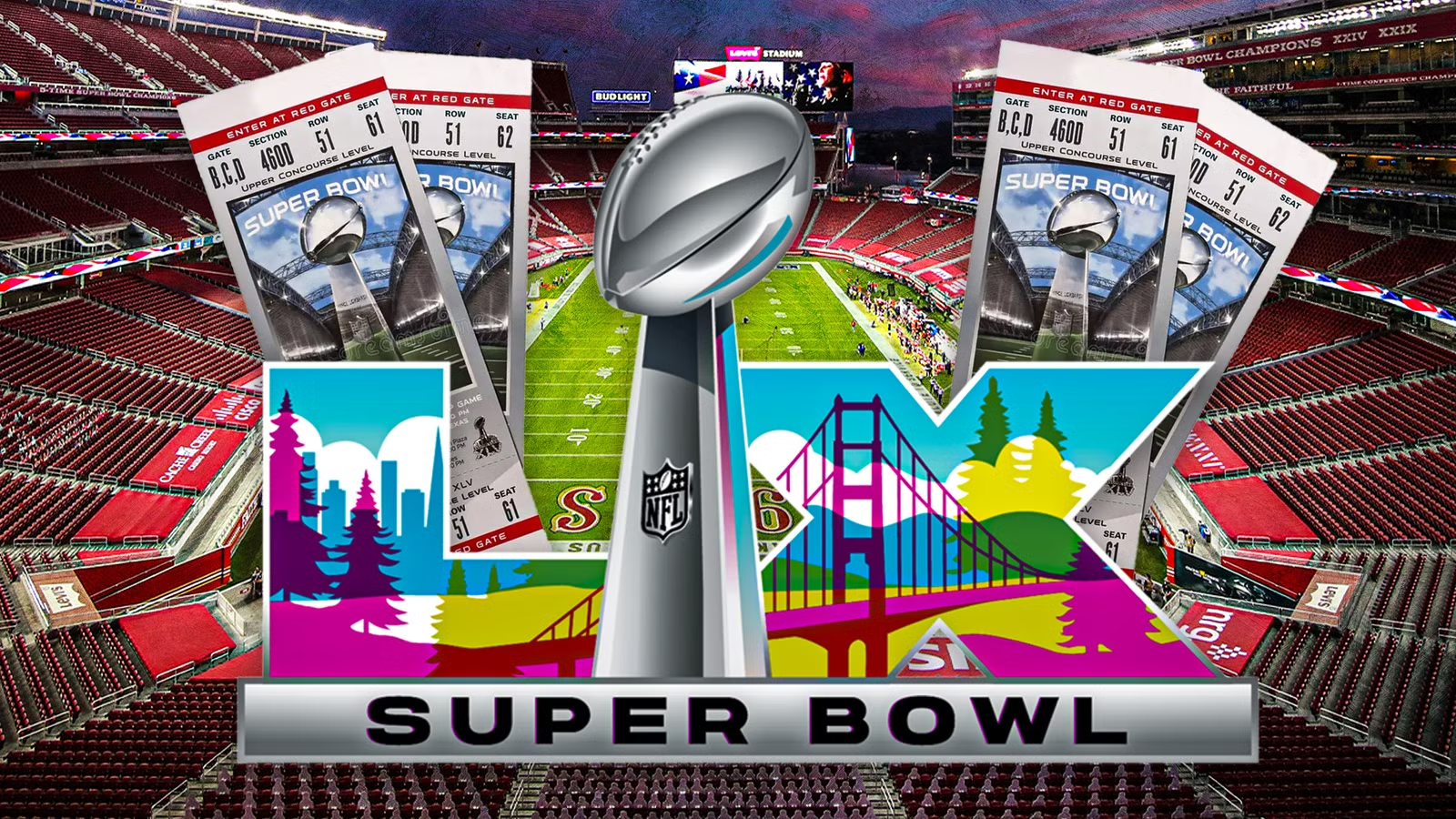
Super Bowl LX, Economic Impact, and Performance Mindset for Mars
How NFL's biggest stage connects economic growth, elite mental performance, and future of human space exploration
Other Sports
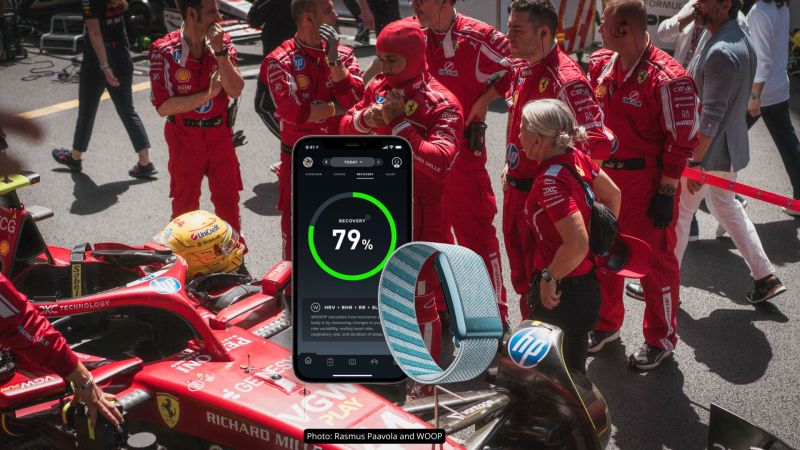
Ferrari and WHOOP show how right device can unlock a Formula 1 partnership
Scuderia Ferrari HP's partnership with WHOOP shows how a focused wearable product can create commercial value and earn a place in Formula 1's premium sponsorship ecosystem.
Other Sports
India's sports economy has crossed $2B — but bigger opportunity is still being missed
India's sports economy has crossed $2 billion, but the next phase of growth will depend on brands building sport through stories, culture, and ideas — not just media inventory.
Soccer
Revenue is only half of the equation.
In football, sustainability is not built by revenue alone. Clubs become stable when their cost base is intelligently designed.
Newsletter
Join the Newsletter
Get new articles, original studies, and SportsLab updates by email.
No spam. Unsubscribe anytime.
Predictions
World Cup 2026
Portugal
Win probability: 8.3%
Portugal has the talent and depth to be a dangerous contender if it builds momentum at the right time.
NBA Championship 2026
Oklahoma City Thunder
Win probability: 42.6%
Oklahoma City looks like the strongest overall title favorite based on its balance, depth, and consistency.
Champions League 2026
Bayern Munchen
Win probability: 37.0%
Bayern enters as the team to beat, with the profile of a serious championship contender.
Roland Garros 2026
Carlos Alcaraz
Win probability: 45.5%
Alcaraz remains the standout favorite on clay thanks to his all-around game and proven level on the surface.
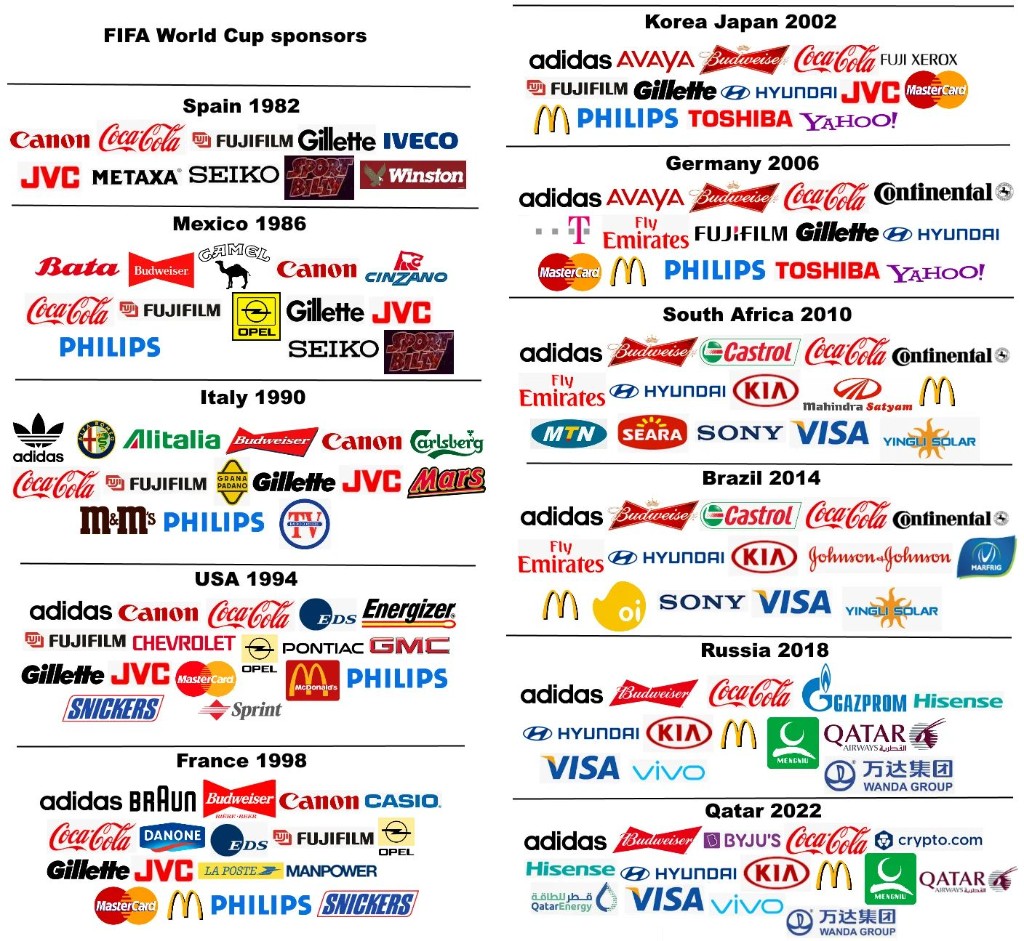
A quick look at the biggest sponsorship deals in soccer, the commercial power of global events, and why sponsorship is now about far more than logo placement.
Get new articles, original studies, and SportsLab updates by email.
Research Archive
All Studies & Analysis
Original studies and research will be published here. The archive will grow as analysts and contributors publish their work.
Studies
Page 1 of 2
★ Updates
Get SportsLab Updates
Receive new articles, original studies, and research updates by email.
Join our newsletter to get research-driven sports analysis, tactical breakdowns, and selected platform updates delivered to your inbox.
No spam. Only thoughtful sports analysis and important updates.
What you'll get
Original Articles
New sports analysis and commentary from SportsLab and future contributors.
Research Studies
Deeper tactical breakdowns, data studies, and long-form sports intelligence.
Early Updates
Be first to know when new features, archive releases, and site updates go live.
Announcements
Important platform news, contributor openings, and selected SportsLab updates.
Sports understood through data
SportsLab is a research-first sports analytics platform. We believe the best sports writing is rigorous, data-backed, and honest about uncertainty.
"Most sports media tells you what happened. We tell you why — and what it means."
SportsLab was founded on the belief that sports fans deserve more than scorelines and hot takes. We are building a platform for analysts who lead with evidence — who treat every match, every season, every transfer window as an opportunity to learn something genuinely new about how sport works.
Every article published on SportsLab will go through an editorial review process to ensure it meets our standards for analytical rigor, data transparency, and clear writing. We cite our sources, explain our methodology, and flag uncertainty where it exists.
SportsLab will open the platform for qualified analysts to publish their research alongside our editorial team — creating a hub for sports intelligence that rivals academic journals in depth, but reads like the best sports journalism.
Data-First
Every claim is supported by evidence. We lead with data and build the narrative from what the numbers tell us.
Honest Analysis
We are clear about what we know, what we don't, and where the data runs out. No false certainty.
Research Depth
We publish long-form studies designed to reward careful reading and repeated reference — not quick takes.
Analyst Community
We are building a platform where the best sports minds can publish, grow an audience, and earn from their work.
Stay Updated
Subscribe to our newsletter for original research, analysis, and contributor updates.
Privacy Policy
SportsLab · Last updated: March 2026
SportsLab respects your privacy and is committed to protecting your personal information.
1. Information we collect
We may collect the following information when you use our website:
Email address, if you join our newsletter
Information you provide in forms or messages
Basic usage data such as pages visited, browser type, device information, and general analytics data
2. How we use your information
We use your information to:
Send newsletters, updates, and new article alerts
Improve the website, content, and user experience
Monitor website performance and analytics
Communicate important updates about SportsLab
3. Newsletter and email communications
If you subscribe to our newsletter, we may send you:
New articles and research updates
Platform news and announcements
Contributor or launch updates
You can unsubscribe at any time using the link in our emails.
4. Cookies and analytics
SportsLab may use cookies or similar technologies to understand how visitors use the site and to improve performance.
We may also use third-party analytics tools to collect general website usage information.
5. Third-party services
We may use third-party services to help operate the website, including:
Website hosting providers
Analytics services
Email newsletter providers
Form tools
These services may process limited personal information on our behalf.
6. Data sharing
We do not sell your personal information.
We may share information only when necessary:
with service providers who help us operate the website
if required by law
to protect our rights, users, or the security of the website
7. Data retention
We keep personal information only as long as necessary for the purposes described in this policy, unless a longer retention period is required by law.
8. Your choices
You may unsubscribe from newsletters at any time and, where applicable, request deletion of your personal information.
9. Security
We take reasonable steps to protect your information, but no method of transmission or storage is completely secure.
10. Children’s privacy
SportsLab is not intended for children under 13, and we do not knowingly collect personal information from children.
11. Changes to this Privacy Policy
We may update this Privacy Policy from time to time. Any updates will be posted on this page with a revised “Last updated” date.
Terms of Use
SportsLab · Last updated: March 2026
By accessing or using SportsLab, you agree to these Terms of Use.
1. Use of the website
SportsLab provides sports analysis, research, commentary, and related content for informational purposes.
You agree to use the website lawfully and respectfully.
2. Intellectual property
Unless otherwise stated, all content on SportsLab, including text, branding, design, graphics, and original analysis, is owned by or licensed to SportsLab.
You may not copy, reproduce, republish, distribute, or commercially use our content without written permission.
3. User submissions
If you later submit forms, messages, or content, you are responsible for the information you provide.
By submitting content or materials, you confirm that you have the right to do so and that your submission does not violate the rights of others.
4. No guarantees
We aim to provide thoughtful, accurate, and well-researched content, but we do not guarantee that all content is complete, current, or error-free.
SportsLab may update, remove, or change content at any time without notice.
5. Informational purposes only
Content on SportsLab is provided for general informational and editorial purposes only. It should not be considered legal, financial, betting, investment, or professional advice.
Users are responsible for how they interpret and use the information on the website.
6. External links
The website may contain links to third-party websites. We are not responsible for the content, policies, or practices of external sites.
7. Prohibited use
You agree not to:
use the site for unlawful purposes
interfere with site security or functionality
attempt to access restricted areas without authorization
copy or misuse content in violation of these terms
8. Limitation of liability
To the fullest extent permitted by law, SportsLab is not liable for any loss, damage, or claim arising from your use of the website or reliance on its content.
9. Changes to these Terms
We may update these Terms of Use at any time. Continued use of the website after changes are posted means you accept the updated terms.
★ Contributors
Write for SportsLab
Have a story idea, analysis piece, or article to share? We're open to hearing from writers, analysts, and contributors with strong ideas in sports, business, tactics, and data.
Join our contributor community
SportsLab is building a home for thoughtful sports analysis and original research. We work with writers, analysts, and researchers who bring unique perspectives to the world of sports.
Home›Archive›Soccer Shoes Lead Sales Across All Regions
Soccer
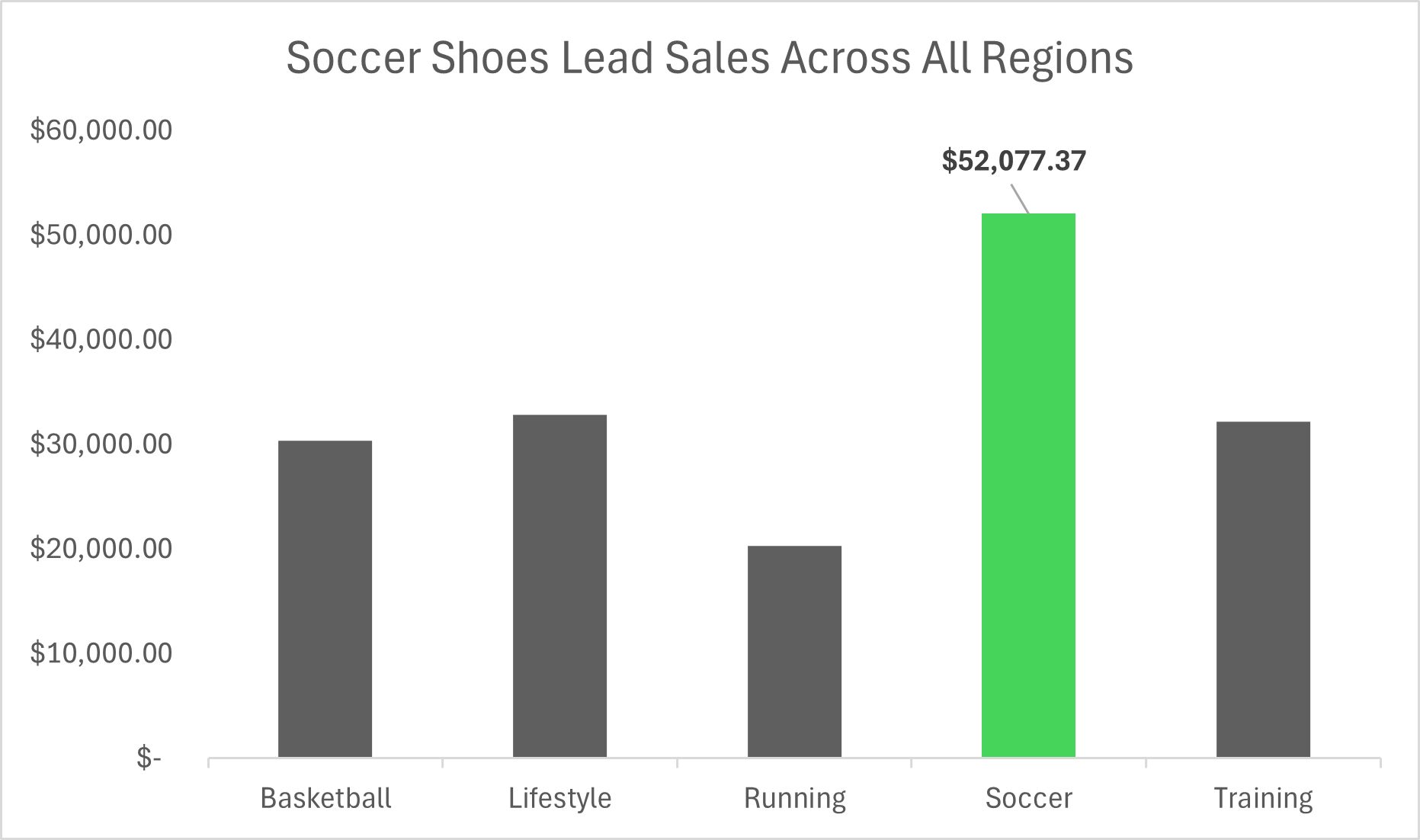
Soccer Shoes Lead Sales Across All Regions
How cleaning and standardizing 25,000 Nike sales records revealed soccer as the top-performing category
The Future of the Sport Economy for Global Health and Sustainability
The sports economy, a massive market worth $2.3 trillion, plays a critical role in both public health and environmental sustainability. The Sports for People and Planet report, published by the World Economic Forum, predicts the sector could reach $8.8 trillion by 2050, while calling for urgent action against risks such as the climate crisis and physical inactivity. This transformation, which will shape the future of prosperity, encompasses not only financial returns but also thriving natural ecosystems.
Highlights
Analysis of the growth potential and environmental risks of the sports economy.
The sports economy is expected to reach $8.8 trillion by 2050.
Climate change and inaction could lead to massive revenue losses of up to 18% for the sector.
Extreme weather conditions have directly disrupted one-fifth of sporting events in the last 20 years.
Designing cities with a focus on sports can improve external factors that affect 80% of public health.
The sector emits more carbon emissions each year than all other European countries except Germany.
The World Economic Forum's Report
The World Economic Forum, in collaboration with Oliver Wyman, has published a report entitled "Sport for People and the Planet," which measures the size of the sport economy and outlines how it can enhance resilience by addressing both physical inactivity and the climate and nature crisis. The report highlights the urgent social and economic need for coordinated public-private sector action to secure the long-term resilience of the sector, presenting transformative, multi-stakeholder pathways and innovative case studies to demonstrate how sport can actively shape a future where well-being is defined not only by financial returns but also by healthier societies and thriving natural ecosystems. This approach ensures that the future of sport remains competitive and inspiring, while also being sustainable and inclusive for people and the planet.
Growth Projections and Risks
According to the Sport for People and the Planet report, the $2.3 trillion global sports economy is experiencing strong growth, and annual revenues are projected to reach $8.8 trillion by 2050. However, this trend is increasingly at risk due to rising physical inactivity and growing environmental challenges. These factors could lead to a decrease in annual revenue of up to $1.6 trillion by the middle of the century, undermining the broader impact of the sector.
What comes to mind when you think of sports?
What comes to mind when you think of sports? The FIFA World Cup, or amateur matches played by children in your local park? According to the World Economic Forum's new report, Sport for People and Planet, published on January 15, 2026, both are equally part of the $2.3 trillion sports economy. This vast sector spans from global events and consumer brands to adventure tourism and active lifestyles, creating jobs, supporting growth, and promoting healthier living.
The Economics of Sports
The sports sector, a major driver of the global economy, generates $2.3 trillion in annual revenue, representing approximately 2% of global GDP. Current estimates project the sector, which also includes related industries such as broadcasting and streaming, nutrition, and wearable technologies, to reach $3.7 trillion by 2030 (at a compound annual growth rate of 10%) and $8.8 trillion by 2050.
Trends shaping the growth of the sports economy:
The emergence of sport as an asset class.
With women's sports becoming mainstream, revenues tripled between 2022 and 2025, reaching $2.35 billion.
Rebalancing sports growth with developing economies.
Sports tourism, the fastest growing sector within the tourism industry, is gaining momentum.
Fundamental Challenges
However, the economics of sport faces two fundamental and interconnected challenges that it can also help to solve:
1. Increased physical inactivity
According to the World Health Organization, in 2024 approximately one-third of adults did not get the recommended 150 minutes of moderate-intensity exercise per week. Meanwhile, a 2021 survey conducted by IPSOS for the World Economic Forum revealed that more than half of people (58%) want to do more sports, but are limited by time, cost, weather conditions, and lack of access to facilities.
2. Climate change and sports activities
Extreme weather events, air and water pollution, and other physical climate risks affect everything from event planning and athlete health to sports infrastructure and the natural environment. Meanwhile, essential ecosystem services, such as freshwater resources vital to sports equipment manufacturing and sports tourism, are under increasing pressure.
One in five stadiums in the United Kingdom will be affected by river flooding by 2050.
Ten countries with enough snow to host the Winter Olympics by 2040.
At the World Athletics Championships in Qatar, 40% of the women's marathon runners did not finish the race.
During the 2023 Canadian wildfires, 3 US league games had to be canceled.
The industry itself contributes to climate change, releasing an estimated 450 million tons of emissions annually; this figure is higher than that of all European countries except Germany.
Paths to Prosperity
The World Economic Forum's Sport for People and Planet report identifies three key pathways for the sport economy to advance economic, social, and environmental well-being through multi-stakeholder partnerships. There are already examples of this being implemented; for instance, the UN's Sport for Climate Action and Sport for Nature frameworks for professional and participatory sports organizations set guidelines to accelerate action and establish reporting standards. However, a more holistic approach is also possible.
1. Leading the way in resource management
By 2025, humans are consuming Earth's natural resources at 1.8 times the rate at which Earth regenerates. Growth of the sports economy can only be achieved within the planet's limitations. The sector is closely linked to four key value chains (food, energy, infrastructure, and fashion) that account for 90% of human-induced pressure on nature and biodiversity loss.
By 2030, we face a 40% deficit in global freshwater resources, a deficit that will only grow larger due to the effects of the climate crisis. This will not only impact local communities' access to safe drinking water but also restrict participation in water sports and challenge the ability of the sporting goods industry to continue production.
2. Placing sports at the heart of cities
Our physical environment has a significant impact on shaping our quality of life and lifespan. According to the report, approximately 80% of the factors affecting public health lie outside the healthcare system. By 2050, urban areas will be home to approximately 70% of the world's population; this means that the design of urban areas will be critical to human well-being and the development of a resilient sports economy.
3. To accelerate purpose-oriented capital flows
According to the report, purpose-driven investments and corporate sponsorships can open up new avenues for growth by enabling the sports economy to deliver health, environmental, and financial benefits to communities. In regions facing increasing climate and natural risks, investors can collaborate with governments to transform sports infrastructure into centers of community resilience.
Conclusion
Bold leadership, partnerships, and empowered governance can help the sports economy strengthen the socio-environmental systems it depends on, increase profitability and participation, and reduce its environmental footprint. The transformation of the sports economy represents not just a business opportunity, but a crucial pathway toward a more sustainable, healthier, and resilient global society.
The $2.3 trillion global sports economy is experiencing robust growth, with annual revenues projected to reach $8.8 trillion by 2050. However, this trajectory is increasingly at risk due to rising levels of physical inactivity and escalating environmental challenges – factors that could erode up to $1.6 trillion in annual revenue by mid-century and undermine the sector's broader impact.
When you think about sport, what do you picture? The FIFA World Cup or grassroots games played by children in your local park?
Both are equally part of the $2.3 trillion sports economy, a new Forum report shows. This vast sector ranges from global events and consumer brands, to adventure tourism and active lifestyles – creating jobs, driving growth and supporting healthier lives.
In an increasingly divided world, sport is one of the few uniting forces – but today it faces an unprecedented challenge from climate change.
Extreme weather disrupted more than 2,000 global events between 2004 and 2024, according to a study in the International Journal of Disaster Risk Reduction, with a fifth of those being sporting events.
At the FIFA Club World Cup in Los Angeles in June 2025, six matches were delayed due to storms. Planetary health is central to human health and a sustainable sports economy.
In collaboration with Oliver Wyman, the World Economic Forum has published Sports for People and Planet, a report that measures the size of the sports economy – and outlines how to drive resilience by addressing both physical inactivity and the climate and nature crisis.
What is the sports economy?
It is a major global economic driver generating $2.3 trillion in annual revenues, close to 2% of global GDP.
Current projections show the sector, including connected industries such as broadcasting and streaming, nutrition and wearables, growing to $3.7 trillion by 2030 (a 10% compound annual growth rate) and reaching $8.8 trillion by 2050.
The growth of the sports economy is being shaped by four trends:
The emergence of sports as an asset class.
The mainstreaming of women's sport – revenues tripled between 2022 and 2025 to $2.35 billion.
Rebalancing of sports growth with emerging economies.
The acceleration of sports tourism – the fastest-growing area of tourism.
The sports economy is growing. But it faces two main, interconnected challenges, which it can also help to address:
1. Rising physical inactivity is eroding future demand
In 2024, around one in three adults didn't get the recommended 150 minutes of moderate intensity exercise each week, according to the World Health Organization.
Meanwhile, a 2021 IPSOS survey for the World Economic Forum found that over half of people (58%) want to do more sport, but they're limited by a lack of time, cost, weather and access to facilities.
The report notes: "As fiscal priorities shift towards acute healthcare, defence and crisis response, funding for prevention and community sport initiatives risks further erosion."
2. Climate change is disrupting sports activities
Physical climate risks, including extreme weather events and air and water pollution, are impacting everything from event scheduling and athlete health, to the infrastructure and natural settings of sports.
Meanwhile, essential ecosystem services, such as freshwater resources critical for sporting goods production and sports tourism, are under increasing strain.
1 in 5 UK stadiums affected by fluvial flooding by 2050
10 countries with enough snow to host the Winter Olympics by 2040
40% of participants failed to complete the women's marathon at the World Athletic Championships in Qatar
3 US leagues forced to cancel games during the 2023 Canada wildfires
The industry itself is contributing to climate change, emitting up to an estimated 450 million tonnes in emissions each year – more than any European nation except Germany.
These two risks compound on each other. For example, heatwaves, pollution and extreme weather not only disrupt competitions and training for elite athletes, but they also discourage physical activity, and grassroots sport, impacting health and wellbeing at every level.
By 2030, physical inactivity, climate change and nature loss could reduce annual revenues of the sports economy by 14%, potentially increasing up to 18% by 2050.
Sport depends on stable environmental conditions. More than 90% of media rights and 76% of sponsorship revenues in professional sport are linked to outdoor activities, placing its two biggest revenue streams at direct risk from environmental disruption and the loss of visual appeal related to degradation.
But the sports economy cannot solve these challenges alone.
Pathways to prosperity
The report identifies three key pathways for the sports economy to advance economic, social and environmental prosperity through multistakeholder partnerships.
There are examples of this already in action, such as the UN's Sports for Climate Action and Sports for Nature frameworks for professional and participatory sporting organizations, which set guidelines and establish reporting standards to catalyze action.
But a more joined-up approach is possible.
The report notes there is now a very real opportunity to "transform systemic risks into drivers of innovation, growth and shared value".
Together, these three distinct pathways form a coordinated transformation funnel, driving change from within the sector outwards:
1. Championing resource stewardship
As of 2025, humans are consuming the Earth's natural resources at 1.8 times the speed at which the Earth can regenerate. The growth of the sports economy can only be achieved within the limits of the planet.
The sector is deeply interconnected with the four principal value chains – food, energy, infrastructure and fashion – that together drive 90% of human-induced pressure on nature and biodiversity loss.
"By championing resource stewardship, the sports economy can turn resource constraints into catalysts for innovation, resilience and inclusive growth," the report says.
By 2030, we face a global shortfall in the freshwater supply of 40%, which will only be further widened by the impacts of the climate crisis. Not only will this affect local communities' access to safe drinking water, but it will also restrict participation in water-based sports and challenge the sporting goods industry's ability to sustain production.
Between 2019 and 2023, PUMA was able to save more than 2.4 million cubic metres of water per year - around seven million bathtubs - through various efficiency programmes.
Strategic partnerships with sports governing bodies can enhance resource stewardship, as they serve as key stakeholders in efforts to minimize surplus waste generated at competitive events.
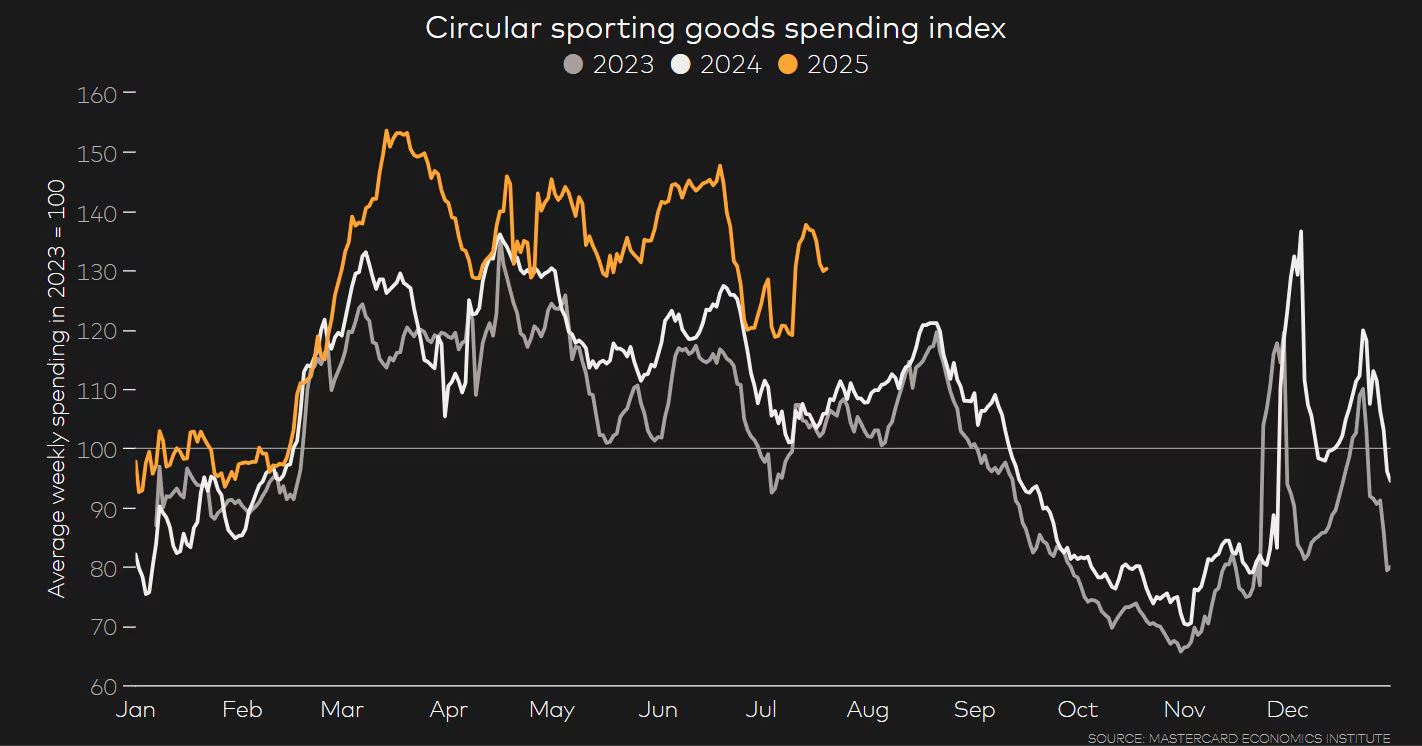
In August 2025, Mastercard found that spending on circular sports is growing year on year, with sales of used sporting equipment now nearly 30% above 2022 levels.
2. Placing sport at the heart of cities
Our physical environment has a huge impact on shaping our quality of life and longevity. The report finds that around 80% of the factors influencing societal health lie outside the healthcare system.
By 2050, urban areas will be home to nearly 70% of the world's population meaning their design will be critical to people's wellbeing, and the development of a resilient sports economy.
Bad weather, lack of money and lack of time remain the biggest barriers to physical activity, but cities can address these by ensuring equal access to nature, sustainably built sports infrastructure, and sustainable mobility.
Research in Spain shows a link between access to urban green spaces and higher physical activity levels, while restoring natural habitats can improve air quality.
Paris is a great example of a city marrying sport and nature after it used hosting the 2024 Olympics as a catalyst to clean up the Seine. This summer, the water quality in the Ile-de-France region was declared "exceptional".
Meanwhile, countries such as Viet Nam are rolling out dedicated cycle lanes to cut vehicle emissions and boost activity. In the Netherlands, the Dutch F1 Grand Prix required all 110,000 spectators to arrive either by public transport or bike, with storage space for 45,000 bicycles.
3. Catalyzing purpose-driven capital flows
Purpose-driven investment and corporate sponsorship can help to unlock new avenues for growth, says the report, enabling the sports economy to deliver health, environmental and financial benefits to communities.
In places facing growing climate and nature risks, investors can partner with governments to transform sporting infrastructure into hubs of community resilience.
Stadiums and sports grounds can be designed to withstand the increasing frequency of natural disasters, doing double duty as sporting venues – and community shelters during emergencies.
Community facilities co-funded by government and investors can promote preventative healthcare.
A good example of this is La Liga's Athletic Club San Mamés Stadium in Bilbao, Spain, built in 2013 and co-funded by the local municipality, Biscay's Provincial Council and the Basque Government. It includes public swimming pools, a gym and wellness spaces for the local community.
Mutually beneficial partnerships include DHL pairing with F1 to accelerate their adoption of biofuel-powered trucks, more fuel-efficient aircraft and the launch of sustainable motorhomes to house their logistics team during certain phases of the race tour.
Sponsors can also leverage sports partnerships, such as TCS' sponsorship of the London Marathon, to enhance employee wellbeing.
Conclusion
Bold leadership, partnerships and strengthened governance can help the sports economy to reinforce the socio-environmental systems it depends on, boost profitability and participation, and reduce its environmental footprint.
Nike is not buying a ball. It is buying the most filmed object in European football.
The brand has entered exclusive negotiations with UC3 to become the official supplier of match balls for the Champions League, Europa League, and Conference League between 2027 and 2031. adidas, which has held that space since 2001, has already confirmed that it will not renew. The new deal could be worth more than €40 million per year.
At first glance, it seems like a detail.
A Morningstar analyst summed up the most obvious reaction well: he never looked at the logo on a ball and thought he needed to buy new sneakers.
But that is exactly where the story gets interesting. Because the ball may be the most underestimated brand asset in football.
It does not have the glamour of a kit. It does not have the face of a player. It does not create lines outside a store.
But it is in every pass, every shot, every goal, every replay. It is the visual center of the game.
And that matters even more at a time when Nike has lost ground to PUMA Group in domestic leagues: the Premier League, Lega Serie A, and LALIGA.
In other words: while Puma gained horizontal presence in domestic competitions, Nike is trying to recover vertical visibility at the highest point of the pyramid.
This is not a cultural play. It is an omnipresence play.
That is 531 matches per season across the three competitions. 531 times in which the swoosh is the brand closest to the action.
Nike is not buying an asset that persuades. It is buying an asset that appears.
And in football, appearing at the center of the action hundreds of times per season is still a form of power that almost nobody talks about.
If you could choose a single visibility asset in football, which would you choose: the shirt, the player, or the ball?